Introduction
Commercial flooring needs to handle considerably more activity than flooring in a typical residential property. Offices, retail stores, healthcare facilities, restaurants, educational buildings, and other commercial spaces experience continuous foot traffic, frequent cleaning, furniture movement, and everyday wear.
Vinyl flooring has become a practical option for many of these environments because it combines durability, easy maintenance, and design flexibility. However, choosing the right product requires more than simply selecting an attractive colour or pattern. Factors such as traffic levels, moisture exposure, maintenance requirements, slip resistance, and installation conditions should all be considered.
For professional flooring solutions and installation requirements, businesses can explore https://www.singcons.com/vinal.php.
1. Consider the Level of Foot Traffic
The first factor to evaluate is how much traffic the flooring will receive. A small office may experience moderate daily footfall, while a shopping area, school, clinic, or commercial entrance can have continuous movement throughout the day.
For high-traffic environments, choose vinyl flooring designed specifically for commercial use. Stronger wear layers can help the surface withstand regular walking, furniture movement, and general abrasion.
Understanding the expected traffic level helps ensure that the flooring remains functional and attractive for longer.
2. Choose the Right Wear Layer
The wear layer protects the flooring surface from everyday use. Commercial environments generally require stronger protection than areas with limited activity.
When comparing vinyl flooring options, consider:
- Expected daily foot traffic
- Type of commercial activity
- Furniture movement
- Cleaning frequency
- Risk of surface abrasion
- Expected service life
A suitable wear layer can help reduce premature surface damage and maintain the flooring's appearance.
3. Prioritise Easy Maintenance
Busy commercial properties cannot always dedicate significant time to flooring maintenance. Vinyl flooring is often selected because routine cleaning can be relatively straightforward.
Before installation, consider the property's cleaning routine and choose a flooring surface that can withstand the expected cleaning methods. Regular sweeping, dust removal, and appropriate mopping can help maintain the floor.
For commercial properties requiring complete flooring work, businesses can also review the options available through https://www.singcons.com/vinal.php.
4. Evaluate Moisture Exposure
Some commercial areas are more exposed to moisture than others. Restaurants, healthcare facilities, washrooms, entrances, and certain retail environments may regularly encounter water or spills.
When selecting vinyl flooring, consider its suitability for the intended environment and make sure the subfloor and installation process are properly prepared. Correct installation is important because flooring performance depends not only on the material but also on the condition of the surface underneath.
5. Consider Slip Resistance and Safety
Safety should be an important consideration in commercial flooring decisions. Areas exposed to spills, cleaning activities, or heavy foot traffic may require flooring with suitable slip-resistant characteristics.
Consider the specific requirements of the property, including:
- Expected moisture exposure
- Type of footwear commonly used
- Cleaning procedures
- Traffic intensity
- Applicable building and safety requirements
A flooring choice should support both practical performance and safe movement throughout the premises.
6. Select a Suitable Design
Commercial flooring does not have to sacrifice appearance for durability. Vinyl flooring is available in a wide range of patterns, colours, and textures.
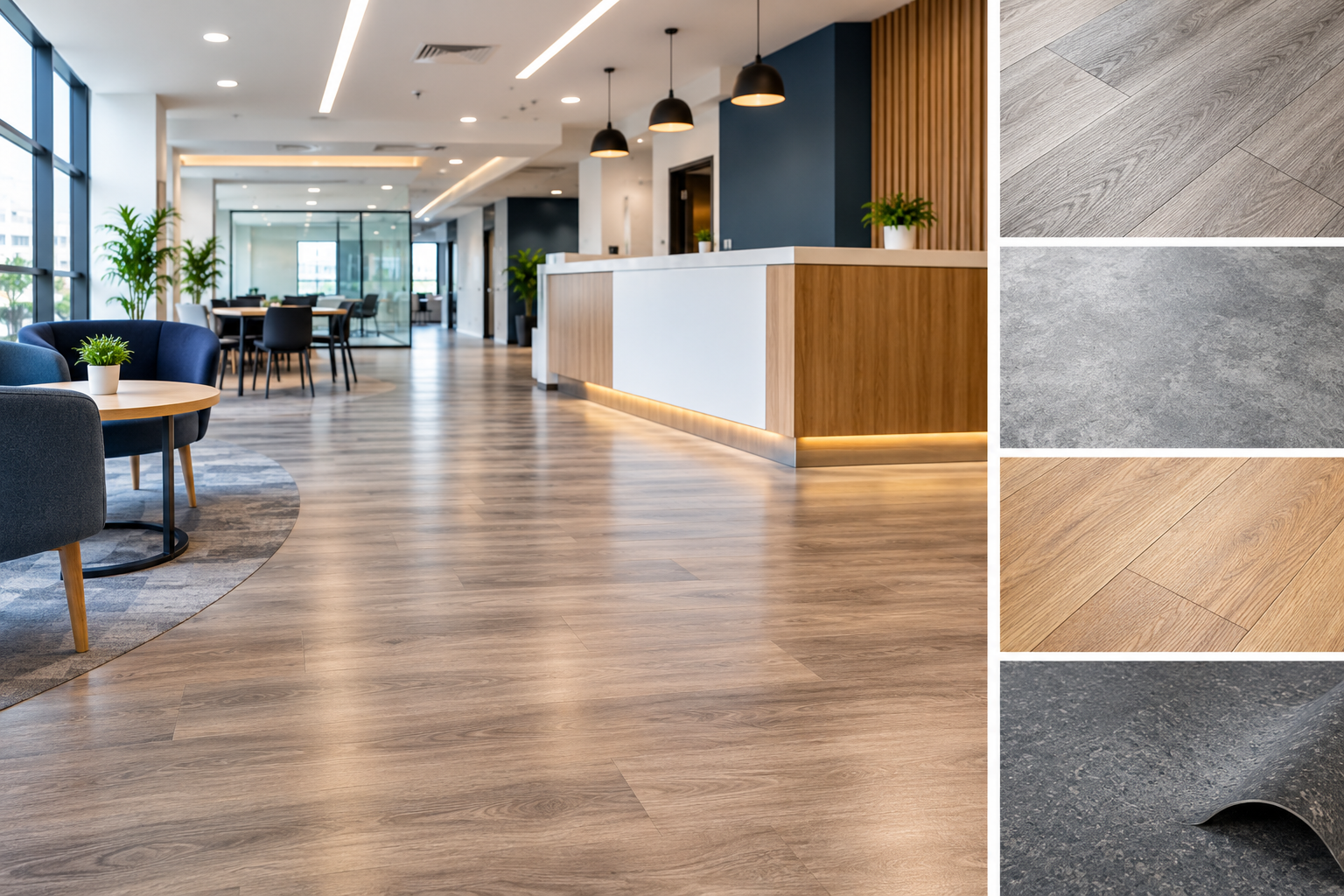
Businesses can select designs that complement their branding and interior style while still meeting practical requirements. Wood-look and stone-look finishes can provide a professional appearance without requiring natural materials.
For commercial flooring and related building services, you can also explore https://www.singcons.com/vinal.php.
7. Think About Installation Requirements
The existing subfloor can significantly affect the final performance of vinyl flooring. Before installation, the surface should be assessed for problems such as unevenness, moisture, cracks, or contamination.
Proper preparation can help reduce installation problems and improve the finished appearance. Businesses should also consider whether the premises can remain operational during installation or whether particular areas need to be completed in stages.
8. Balance Initial Cost With Long-Term Value
Price is naturally an important consideration for commercial projects, but selecting the cheapest flooring option may not always provide the best long-term value.
Instead, compare:
- Material cost
- Installation cost
- Maintenance requirements
- Expected durability
- Replacement frequency
- Cleaning requirements
- Suitability for traffic conditions
A slightly higher initial investment may be worthwhile if the flooring provides better performance and requires fewer repairs or replacements.
9. Match Flooring to the Commercial Space
Different commercial environments have different flooring requirements. For example, a retail store may prioritise appearance and durability, while a healthcare environment may place greater emphasis on hygiene and maintenance.
Before making a final decision, identify the specific demands of the space and select flooring accordingly.
Frequently Asked Questions
Is vinyl flooring suitable for high-traffic commercial areas?
Yes. Commercial-grade vinyl flooring can be suitable for high-traffic areas when the product is selected according to expected usage and installed correctly.
Is vinyl flooring easy to maintain?
Vinyl flooring is generally designed for relatively straightforward routine maintenance. Cleaning requirements depend on the specific product and commercial environment.
Can vinyl flooring be used in moisture-prone areas?
Some vinyl flooring products are suitable for areas exposed to moisture. However, product specifications, subfloor preparation, and installation requirements should be checked before use.
How do I choose vinyl flooring for a busy office?
Consider foot traffic, wear-layer requirements, maintenance needs, appearance, acoustic considerations, and the expected lifespan of the flooring.
Does installation affect vinyl flooring performance?
Yes. Proper subfloor preparation and installation can have a significant impact on the appearance, stability, and long-term performance of vinyl flooring.
Conclusion
Selecting vinyl flooring for a busy commercial environment requires careful consideration of durability, traffic levels, maintenance, moisture exposure, safety, design, and installation conditions. Rather than choosing flooring based only on appearance or initial price, businesses should assess the specific demands of their premises and select a product designed to handle those conditions.
With the right material and proper installation, vinyl flooring can provide a practical and visually appealing surface for a wide range of commercial environments. For professional vinyl flooring solutions, visit https://www.singcons.com/vinal.php.
Need to Transform Your Commercial Space?
If your commercial property needs a durable, practical, and visually appealing flooring solution, selecting the right vinyl flooring can make a noticeable difference. Assess your traffic levels, maintenance needs, moisture exposure, and design requirements before making the final choice.