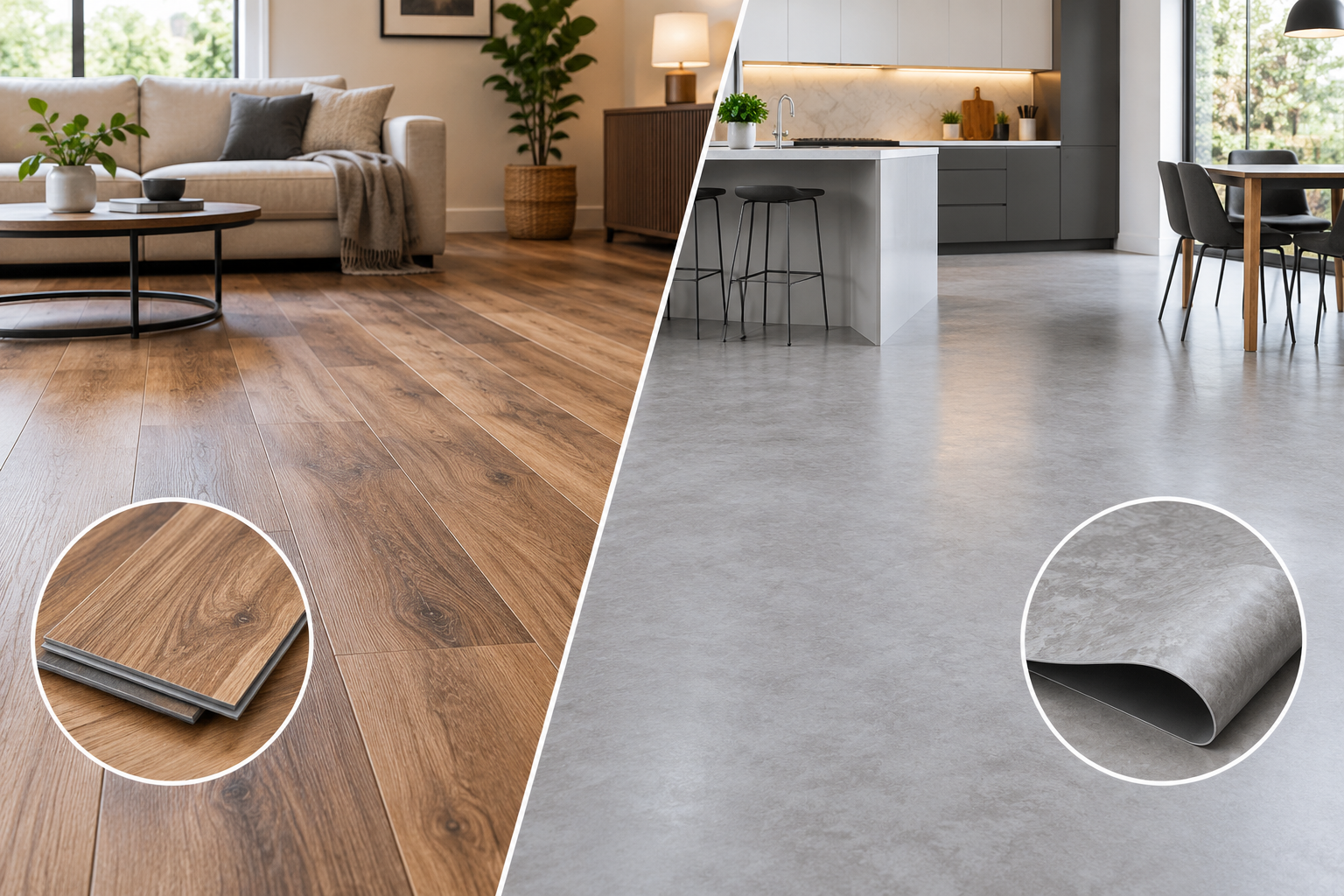
Choosing the right flooring material can have a major impact on the appearance, comfort, maintenance, and functionality of an interior space. Vinyl flooring is a popular option because it offers a practical combination of durability, design flexibility, and easy maintenance.
Among the available vinyl flooring options, vinyl plank flooring and vinyl sheet flooring are commonly considered for residential, commercial, and functional spaces. Although both materials offer several advantages, their construction, installation methods, appearance, and suitability can differ depending on the requirements of the space.
Understanding these differences can help property owners and interior professionals select a flooring solution that fits the intended environment.
What Is Vinyl Plank Flooring?
Vinyl plank flooring is designed to resemble materials such as natural wood or stone while providing the practical characteristics of vinyl. Individual planks are installed across the floor, creating a structured and visually defined appearance.
Vinyl planks are available in different colours, textures, patterns, and finishes, making them suitable for interiors where the flooring is expected to contribute to the overall design.
For professional vinyl flooring solutions and installation services, https://www.singcons.com/vinal.php can be explored according to the requirements of the property.
What Is Vinyl Sheet Flooring?
Vinyl sheet flooring is supplied in large continuous sections rather than individual planks. This creates a more seamless flooring surface with fewer visible joints.
Because of its continuous construction, sheet flooring can be useful in areas where minimizing seams is important. It is available in a variety of colours, patterns, and surface designs, allowing it to work with different interior styles.
Vinyl Plank vs. Vinyl Sheet Flooring
While both options are made from vinyl, their differences can make one more suitable than the other for particular spaces.
1. Appearance and Design
Vinyl plank flooring is often selected when a property owner wants the visual appearance of timber, stone, or other individual flooring materials. The plank format creates visible lines and patterns that can add structure to the interior.
Vinyl sheet flooring provides a more continuous visual effect. It can also reproduce wood, stone, tile, and abstract patterns, but the finished appearance generally has fewer visible joints.
The choice ultimately depends on whether the space benefits more from a defined plank pattern or a seamless surface.
2. Installation Requirements
Vinyl planks are installed piece by piece, allowing installers to work systematically across the floor. Depending on the product and installation method, individual sections can also be easier to handle during installation.
Sheet flooring involves handling larger sections of material. Accurate measurements and careful installation are important because mistakes can become more noticeable across a continuous surface.
Professional installation can help ensure proper alignment, finishing, and overall floor performance.
3. Maintenance and Cleaning
Both vinyl plank and sheet flooring are generally designed to be practical for everyday maintenance. Regular sweeping, vacuuming, and appropriate cleaning can help keep the flooring in good condition.
However, the joints between individual planks can require additional attention compared with the relatively continuous surface of sheet flooring.
For spaces where easy routine cleaning is an important consideration, the structure of the flooring should be evaluated before making a final selection.
Choosing Vinyl Flooring for Different Spaces
Different rooms can have different flooring requirements. The right choice depends on factors such as traffic levels, moisture exposure, interior design, maintenance needs, and expected usage.
Living Rooms
Living rooms often require flooring that balances appearance, comfort, and durability. Vinyl plank flooring can work well where a wood-inspired appearance is desired.
Its plank format can create a warm and structured look that complements modern, contemporary, and traditional interiors.
Bedrooms
Bedrooms generally experience less intensive traffic than commercial or heavily used areas. Both vinyl planks and sheet flooring can be considered depending on the preferred appearance.
Plank flooring can create a residential wood-floor appearance, while sheet flooring can provide a simpler and more continuous surface.
Kitchens
Kitchens require flooring that can handle regular foot traffic, spills, and frequent cleaning. The reduced number of seams offered by sheet flooring can make it an option worth considering for certain kitchen environments.
Vinyl planks can also be suitable when design flexibility and a more segmented appearance are priorities.
Bathrooms
Bathrooms require careful consideration of moisture and installation conditions. Sheet vinyl can provide a continuous surface with fewer seams, which may be useful in moisture-prone environments.
However, proper installation and preparation of the underlying surface remain important for long-term performance.
For more information about vinyl flooring applications and professional flooring work, visit https://www.singcons.com/vinal.php.
Offices and Commercial Spaces
Commercial spaces may experience higher foot traffic and require flooring that balances durability, maintenance, and appearance.
Vinyl plank flooring can provide a professional appearance while offering a range of design choices. Sheet flooring may be considered where a continuous surface and straightforward visual layout are preferred.
The expected traffic level should be evaluated before selecting the flooring type.
Factors to Consider Before Choosing
Before selecting vinyl plank or sheet flooring, property owners should consider several practical factors.
Traffic Level
High-traffic areas require flooring that can withstand frequent use. Understanding the expected traffic level can help narrow down suitable flooring products.
Moisture Exposure
Rooms exposed to water or moisture require careful consideration of the flooring material, installation method, and subfloor condition.
Design Requirements
Flooring contributes significantly to the overall appearance of an interior. Consider the desired colour, texture, pattern, and relationship with walls, furniture, and other finishes.
Maintenance Needs
Consider how frequently the space will be cleaned and how much maintenance the flooring is expected to require.
Installation Conditions
The condition and levelness of the existing floor can influence installation requirements. Proper surface preparation is important for achieving a smooth and durable finish.
Advantages of Vinyl Plank Flooring
Vinyl plank flooring can offer several practical and design benefits, including:
- Wood and stone-inspired designs
- Wide range of colours and patterns
- Individual plank installation
- Flexible design possibilities
- Suitable options for residential and commercial interiors
- Practical everyday maintenance
Advantages of Vinyl Sheet Flooring
Vinyl sheet flooring can also provide useful benefits, such as:
- Continuous surface appearance
- Fewer visible seams
- Multiple design options
- Practical cleaning and maintenance
- Suitable options for selected moisture-prone spaces
- Flexible application across different interiors
Which Flooring Should You Choose?
There is no single flooring format that is suitable for every space. Vinyl plank flooring may be more appropriate when appearance, plank-style design, and visual detailing are priorities.
Vinyl sheet flooring may be worth considering when a continuous surface, fewer visible seams, and practical maintenance are important considerations.
The final decision should take into account the room's purpose, traffic level, moisture exposure, design requirements, installation conditions, and maintenance expectations.
For professional guidance and vinyl flooring solutions, https://www.singcons.com/vinal.php provides a relevant starting point for exploring flooring services.
Frequently Asked Questions
Is vinyl plank flooring suitable for residential spaces?
Yes, vinyl plank flooring can be used in many residential spaces, including living rooms, bedrooms, and other areas where a wood or stone-inspired appearance is desired.
Is vinyl sheet flooring easier to clean?
Its continuous surface can reduce the number of visible joints, which may make routine cleaning more straightforward in some applications. Cleaning requirements still depend on the specific flooring product and installation.
Can vinyl flooring be used in commercial areas?
Yes, suitable vinyl flooring products can be used in offices, retail environments, and other commercial spaces. Product selection should consider expected foot traffic and usage conditions.
What should be checked before vinyl flooring installation?
The existing surface should be checked for cleanliness, levelness, moisture conditions, and other issues that could affect installation and final flooring performance.
Conclusion
Vinyl plank and vinyl sheet flooring can both provide practical and attractive solutions for different interior spaces. Vinyl planks offer a more defined, plank-based appearance and a wide range of design possibilities, while sheet flooring provides a more continuous surface with fewer visible seams.
The best option depends on the specific requirements of the space, including traffic, moisture exposure, appearance, maintenance, and installation conditions. Careful material selection and professional installation can help achieve a durable and visually consistent flooring finish.
To explore professional vinyl flooring solutions and services, visit https://www.singcons.com/vinal.php.
Need to Transform Your Flooring?
If you are planning to upgrade an existing floor, choosing the right vinyl flooring format can make a significant difference to the appearance and usability of the space. Evaluate the room's requirements, compare suitable materials, and select an installation approach that supports long-term flooring performance.