Introduction
Lighting is an essential part of every commercial space, from offices and retail stores to warehouses and industrial facilities. However, inefficient lighting systems can increase electricity bills, waste energy, and create unnecessary maintenance expenses. Businesses looking to improve operational efficiency can benefit from adopting smarter and more sustainable lighting practices.
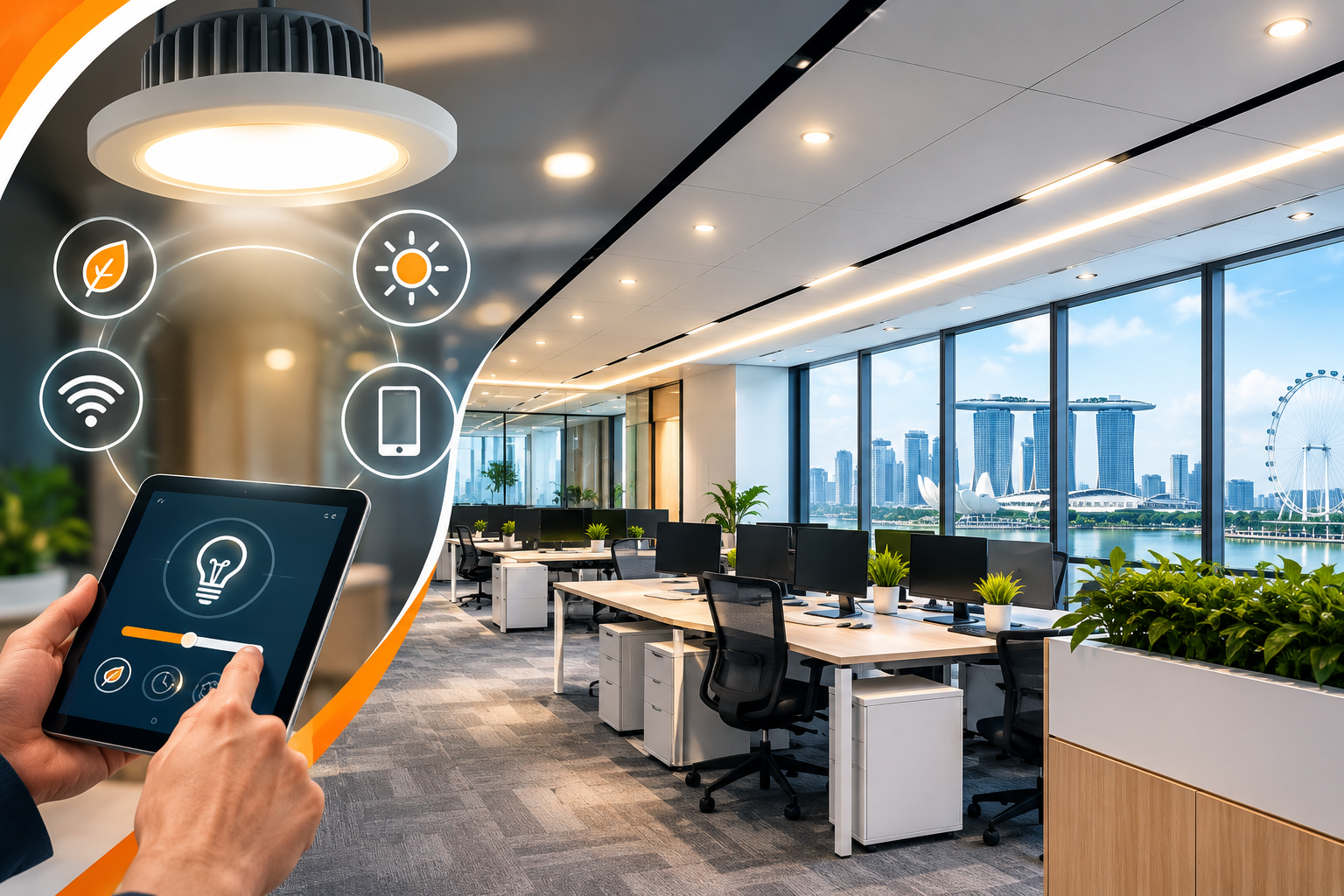
Smart lighting combines energy-efficient fixtures, automation, sensors, and intelligent controls to provide suitable illumination when and where it is needed. These solutions help businesses manage energy consumption while maintaining comfortable and productive working environments.
With thoughtful planning and professional electrical installation, organizations can make their lighting systems more efficient, reliable, and environmentally responsible.
What Is Sustainable Lighting?
Sustainable lighting refers to lighting practices and technologies designed to reduce energy consumption, minimize waste, and support long-term efficiency without compromising safety or visual comfort.
Modern sustainable lighting may include LED fixtures, occupancy sensors, daylight-responsive controls, programmable timers, and automated lighting management systems. The right combination depends on the building layout, operating hours, lighting requirements, and existing electrical infrastructure.
Businesses planning electrical upgrades can explore https://www.singcons.com/electrical.php for relevant electrical and lighting work information.
1. Upgrade to Energy-Efficient LED Lighting
LED lighting is one of the most practical ways to improve energy efficiency in commercial buildings. Compared with traditional incandescent lighting, LEDs generally consume less electricity and offer longer service lives.
Businesses can consider LED upgrades for offices, meeting rooms, corridors, retail areas, parking spaces, and warehouses.
Before replacing existing fixtures, assess the required brightness, colour rendering, beam distribution, and compatibility with existing controls. Selecting suitable products helps maintain lighting quality while reducing unnecessary energy use.
2. Install Occupancy and Motion Sensors
Lights are sometimes left switched on in empty meeting rooms, storage areas, washrooms, and corridors. Occupancy and motion sensors can automatically switch lights on or off according to detected activity.
These sensors are particularly useful in spaces with irregular occupancy patterns. They help prevent unnecessary lighting use without requiring employees to manage every switch manually.
Sensor placement and sensitivity should be adjusted to suit the room layout and the activities performed in each area.
3. Use Daylight to Reduce Electricity Consumption
Natural daylight can reduce the need for artificial lighting during working hours. Businesses can make better use of windows, skylights, and suitable interior layouts to improve daylight distribution.
Daylight sensors can automatically dim compatible lighting fixtures when sufficient natural light is available. This approach helps maintain comfortable illumination while avoiding excessive electricity consumption.
Window coverings and glare management should also be considered to prevent harsh sunlight and unwanted heat gain.
4. Introduce Automated Lighting Schedules
Programmable timers allow businesses to align lighting operation with working hours, cleaning schedules, and security requirements.
For example, an office may use normal lighting during business hours, reduced lighting after employees leave, and essential lighting for designated security areas.
Automated schedules are especially useful for facilities with predictable operating hours. They can also be adjusted for weekends, holidays, and seasonal changes.
5. Divide Buildings into Lighting Zones
Different areas of a commercial building have different lighting requirements. A warehouse aisle, reception area, workstation, and conference room do not necessarily need the same illumination levels.
Creating separate lighting zones allows businesses to control each area according to its purpose and occupancy. Employees can adjust lighting where needed instead of illuminating an entire floor unnecessarily.
Thoughtful zoning also supports easier maintenance and future upgrades.
6. Choose Lighting That Supports Employee Comfort
Energy efficiency should not come at the expense of employee comfort. Poor lighting can create glare, shadows, eye strain, and difficulties when performing detailed tasks.
Businesses should select appropriate brightness and colour temperature for each activity. Offices may benefit from balanced, comfortable lighting, while inspection areas and workshops may require more focused illumination.
A professional lighting assessment can help determine suitable lighting levels, fixture placement, and control settings for different workspaces.
7. Monitor Energy Usage and Lighting Performance
Energy monitoring helps businesses understand how much electricity their lighting systems consume and identify opportunities for improvement.
Smart lighting controls and building management systems may provide information about operating hours, energy consumption, occupancy patterns, and fixture performance.
Regular reviews can reveal lights that operate unnecessarily, areas that require control adjustments, and opportunities to improve efficiency. Businesses should compare energy usage over equivalent operating periods to evaluate the impact of upgrades.
Benefits of Smart Lighting for Businesses
Smart and sustainable lighting practices can provide several operational benefits:
- Lower electricity consumption through efficient fixtures and automated controls.
- Reduced maintenance requirements through longer-lasting lighting products.
- Better control over lighting schedules and occupied spaces.
- Improved visual comfort with appropriate brightness and fixture placement.
- Greater visibility into lighting energy consumption.
- Support for broader sustainability and energy-management objectives.
Actual savings depend on existing fixtures, operating hours, electricity rates, building conditions, and the effectiveness of the selected controls.
How to Plan a Smart Lighting Upgrade
Businesses can follow a structured approach when upgrading their lighting systems.
- Assess existing lighting: Record fixture types, wattage, operating hours, and current energy consumption.
- Identify improvement areas: Find locations where lighting is inefficient, poorly distributed, or unnecessarily left on.
- Set clear objectives: Decide whether the priority is reducing energy use, improving comfort, lowering maintenance costs, or automating controls.
- Select suitable technology: Evaluate LEDs, sensors, dimmers, timers, and compatible control systems.
- Plan professional installation: Ensure electrical work follows applicable safety requirements and building regulations.
- Measure results: Review energy consumption, lighting quality, and maintenance needs after implementation.
For assistance with electrical and lighting-related requirements, visit https://www.singcons.com/electrical.php to explore the relevant services.
Common Mistakes to Avoid
Businesses should avoid replacing fixtures without checking the actual lighting requirements of each space. Installing excessively bright lights, using incompatible dimmers, or placing sensors incorrectly can reduce the effectiveness of an upgrade.
Another common mistake is focusing only on initial purchase costs instead of considering energy use, maintenance, and expected service life.
Regular inspections and performance reviews help ensure that the lighting system continues to meet operational needs.
Frequently Asked Questions (FAQs)
1. What is smart lighting for businesses?
Smart lighting uses energy-efficient fixtures, sensors, timers, and automated controls to manage illumination and reduce unnecessary electricity consumption.
2. How can LED lighting help businesses save energy?
LED lights generally consume less electricity than traditional incandescent lights and have a longer service life, helping reduce energy and maintenance costs.
3. How do occupancy sensors improve lighting efficiency?
Occupancy sensors automatically control lights based on detected activity, reducing unnecessary lighting in empty rooms, corridors, and storage areas.
4. What are the benefits of automated lighting controls?
Automated lighting controls help businesses schedule operating hours, adjust brightness, manage lighting zones, and reduce electricity waste.
5. Why is professional electrical installation important for smart lighting?
Professional installation helps ensure correct wiring, compatible controls, safe operation, and compliance with applicable electrical standards.
Businesses can explore Singcons electrical and lighting services at https://www.singcons.com/electrical.php
Conclusion
Smart lighting ideas can help energy-conscious businesses reduce unnecessary electricity consumption, improve workplace comfort, and manage lighting more effectively. LED upgrades, occupancy sensors, daylight controls, automated schedules, and lighting zones offer practical ways to improve efficiency.
The best results come from matching lighting technology to the building's actual requirements and ensuring that electrical installation is safe and properly planned. By reviewing performance regularly, businesses can make informed improvements and support long-term energy management.
Need to Transform Your Business Lighting?
Upgrade your lighting with energy-efficient solutions that support better illumination, reduced energy waste, and reliable electrical performance.
Visit Website
Explore Singcons for electrical and lighting-related work and solutions for commercial and other building requirements.
https://www.singcons.com/electrical.php
Visit the website to learn more about the available electrical services.