Introduction
A beautiful floor begins long before the final flooring material is installed. Whether a property uses ceramic tiles, vinyl flooring, timber, or another surface finish, the condition of the underlying screed has a significant influence on the final result.
Floor screed creates a level and stable base over a structural floor, helping prepare the surface for the selected flooring material. When screed is properly mixed, placed, leveled, and cured, it provides a suitable foundation for achieving a consistent and professional appearance.
However, poor screed workmanship can result in uneven surfaces, visible changes in floor height, inconsistent tile joints, and difficulties during flooring installation. These problems may affect both the appearance and long-term performance of the completed floor.
Businesses and property owners planning flooring improvements can explore floor screed services at https://www.singcons.com/floor.php to understand the importance of proper floor preparation.
What Is Floor Screed and Why Does Surface Quality Matter?
Floor screed is a layer of cementitious or other suitable material applied over a floor base to create a specified level, smoothness, or gradient. It prepares the substrate for the installation of the final floor covering.
Depending on the project requirements, screed may be used to achieve a level surface for internal flooring or a designed fall in areas where water drainage is necessary.
Surface quality matters because the final flooring material depends on the condition of the substrate beneath it. Even small irregularities can become noticeable after installation, particularly with thin coverings or finishes that reflect light.
A properly prepared screed can help installers achieve:
- Consistent floor levels across rooms.
- Better alignment of tiles and flooring joints.
- More uniform contact between the flooring and substrate.
- Fewer installation adjustments and surface imperfections.
- A more professional and visually consistent finish.
For projects requiring reliable floor preparation, https://www.singcons.com/floor.php provides further information about floor screed and flooring-related works.
1. Surface Flatness Determines the Appearance of Finished Flooring
One of the most important factors affecting final floor appearance is surface flatness. When screed contains high spots, depressions, or irregular transitions, the finished flooring may not sit evenly.
For example, large-format tiles installed over an uneven surface may produce noticeable lippage, where the edges of adjacent tiles sit at different heights. With vinyl flooring, surface imperfections may become visible through the finished material, depending on its thickness and construction.
Timber and laminate flooring can also experience installation difficulties when the supporting surface does not meet the manufacturer's flatness requirements.
How to Improve Surface Flatness
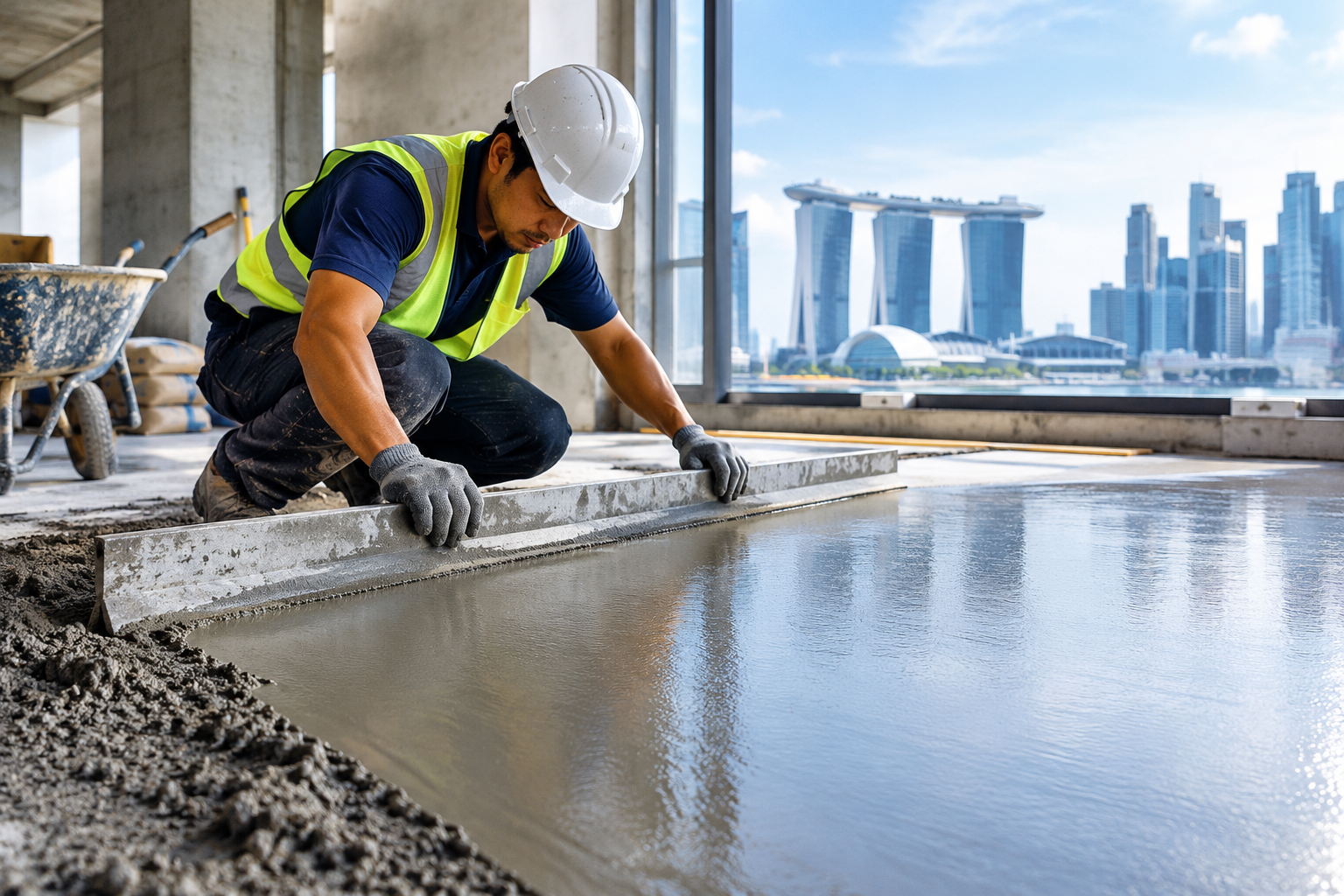
Before flooring installation, contractors should check the screed using suitable straightedges, levels, or other appropriate measuring equipment.
High spots may require controlled grinding, while low areas may need a compatible leveling compound or additional preparation. Any corrective work should be appropriate for the screed type and intended flooring system.
Achieving the specified surface tolerances helps create a more consistent foundation and reduces the risk of visible irregularities.
2. Smoothness Influences the Final Floor Finish
Flatness and smoothness are related, but they are not the same. Flatness concerns variations across the surface, while smoothness concerns the texture and finish of the screed itself.
A floor may be generally level but still contain rough patches, small ridges, trowel marks, or loose particles. These defects can affect the application of adhesives and the appearance of certain floor coverings.
Smoothness is particularly important for thin vinyl, resilient flooring, and other finishes that may reveal imperfections in the underlying surface.
Why Proper Finishing Techniques Matter
The screed should be finished using techniques suitable for the specified material and flooring system. Excessive trowelling, insufficient finishing, or inconsistent workmanship may produce undesirable surface conditions.
However, a perfectly smooth surface is not always the correct requirement for every flooring system. Some installations require a specific surface texture to support bonding.
Contractors should follow the requirements of the screed system, adhesive manufacturer, and selected floor covering rather than assuming that every substrate needs the same finish.
Learn more about professional floor preparation at https://www.singcons.com/floor.php.
3. Screed Cracks Can Affect Floor Appearance
Cracking is another issue that can influence the quality of a finished floor. Screed cracks may develop because of shrinkage, inadequate curing, movement in the substrate, poorly designed joints, or unsuitable installation conditions.
If cracks are not properly assessed, they may contribute to visible defects or affect the performance of the flooring system installed above them.
For example, rigid floor finishes may crack over moving cracks, while certain bonded finishes may develop visible lines or separation if the underlying substrate is unstable.
Preventing and Managing Screed Cracks
Good screed workmanship includes selecting a suitable mix, controlling water content, preparing the substrate correctly, and following the recommended curing procedure.
Movement joints should be planned and carried through the flooring system where required by the design and product specifications.
Existing cracks should be assessed to determine whether they are stable, active, or associated with a structural issue. Suitable repairs or crack-isolation measures may be necessary before installing the final finish.
Simply covering a crack without understanding its cause may allow the problem to reappear.
4. Proper Curing Helps Maintain Surface Quality
Curing is essential for cement-based screed because it supports the development of strength and helps manage moisture loss during the early stages of hardening.
If the screed dries too quickly or curing requirements are ignored, the surface may develop excessive shrinkage, dusting, or cracking. These defects can compromise the quality of the substrate and create additional preparation work before flooring installation.
What Contractors Should Consider
Curing methods and durations should follow the requirements of the particular screed system and site conditions. Conventional cement-based screeds, fast-drying screeds, and other specialist products may have different procedures.
Contractors should also distinguish between curing and drying. A screed may have developed sufficient strength but still contain too much residual moisture for the intended floor covering.
Before installation, moisture levels should be checked using a suitable method and compared with the limits specified by the flooring and adhesive manufacturers.
For professional floor screed planning and preparation, visit https://www.singcons.com/floor.php.
5. Surface Level Differences Can Affect Room Appearance
Consistent floor levels contribute to the visual flow of an interior space. When screed levels vary unexpectedly between rooms or across open-plan areas, the finished floor may appear uneven or create noticeable transitions.
Level differences can also affect skirting details, door clearances, thresholds, and the alignment of adjacent flooring materials.
In wet areas, however, the floor may intentionally require a slope toward drainage points. In these locations, the objective is not always a completely horizontal surface but an accurately formed gradient that supports drainage.
Planning Levels Before Installation
Contractors should establish the required finished floor levels before screed placement. This includes accounting for the thickness of tiles, adhesives, underlays, and other flooring components.
Using suitable level references and checking transitions between rooms can help prevent unexpected height differences.
Correct planning also reduces the need for last-minute adjustments that may affect the finished appearance.
Common Screed Surface Problems and Their Effects
| Screed issue | Possible effect on finished flooring |
|---|---|
| Uneven surface | Tile lippage or visible floor irregularities |
| Rough texture | Visible imperfections beneath some thin coverings |
| Shrinkage cracks | Cracking or visible lines in the floor finish |
| Excessive residual moisture | Adhesive failure or flooring defects |
| Dusty or weak surface | Reduced bonding performance |
| Incorrect floor levels | Uneven transitions between rooms |
| Poor joint planning | Cracks or movement-related defects |
| Inadequate preparation | Installation difficulties and potential rework |
The actual effect depends on the screed type, floor covering, installation method, and severity of the defect. Proper inspection helps determine which corrective measures are necessary.
Frequently Asked Questions (FAQ)
1. What is floor screed, and why is it important?
Floor screed is a layer of material applied over a floor base to create the required level or gradient before installing the final floor covering. Its quality affects floor flatness, installation accuracy, and the overall appearance of the finished surface.
2. How does screed surface quality affect the final floor appearance?
Poor screed quality can cause uneven flooring, visible ridges, inconsistent tile joints, and surface imperfections. Properly prepared screed provides a suitable foundation for a smoother and more consistent finish.
3. What causes cracks in floor screed?
Cracks can develop due to shrinkage, rapid moisture loss, inadequate curing, substrate movement, or improper joint placement. Identifying the cause is essential before carrying out repairs.
4. How can contractors check screed surface quality?
Contractors can use suitable straightedges, levels, moisture-testing equipment, and visual inspections to assess flatness, surface condition, and readiness for flooring installation.
5. Does floor screed need to dry before tiles or vinyl are installed?
Yes. The screed must meet the moisture and curing requirements of the selected flooring system. Installation should only proceed when the substrate satisfies the relevant manufacturer specifications.
Conclusion
Screed surface quality has a direct influence on the appearance, installation, and performance of finished flooring. Flatness, smoothness, curing, moisture control, crack management, and surface cleanliness all contribute to the quality of the final result.
A carefully prepared screed provides a suitable foundation for tiles, vinyl, timber, and other floor coverings. By inspecting the substrate, correcting defects, and following the relevant installation specifications, contractors can reduce avoidable imperfections and support a more consistent finish.
Investing in screed quality before flooring installation can also help reduce rework and protect the overall quality of a flooring project.
For more information about floor screed and flooring-related services, visit https://www.singcons.com/floor.php.
Need Transformation?
Need a smooth, level, and reliable foundation for your next flooring project? Improving screed surface quality can help reduce installation issues and achieve a more consistent final appearance.
Useful Resources
Visit Singcons
Looking for floor screed and flooring solutions for your next project? Explore the services available at: