Introduction
Flooring plays an important role in the appearance, functionality, and durability of residential and commercial spaces. However, before installing tiles, vinyl, epoxy, or other floor finishes, it is essential to prepare the underlying surface correctly. Two common approaches are floor screeding and direct surface preparation.
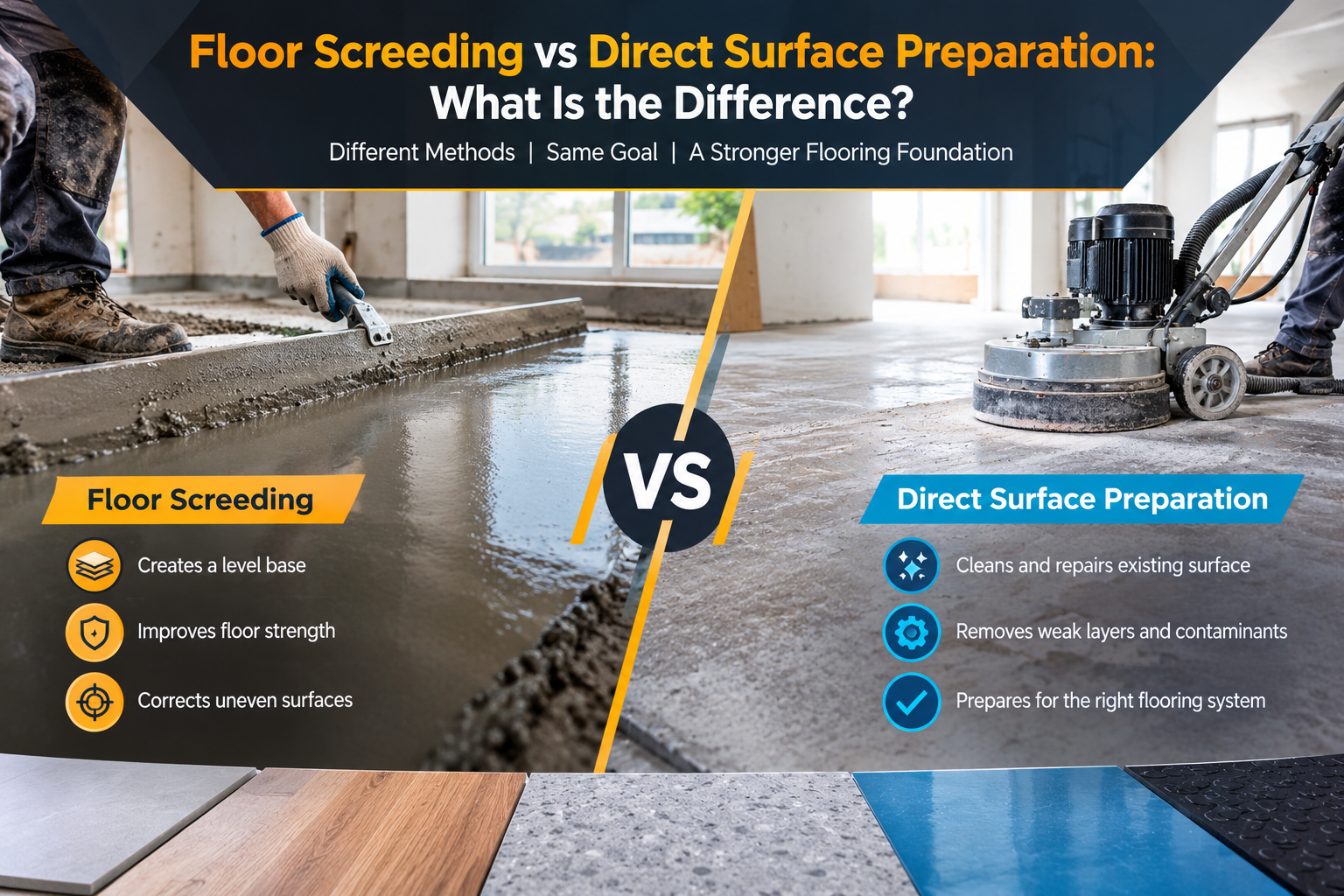
Although both methods help prepare a floor for further work, they serve different purposes. Floor screeding creates or improves a level base, while direct surface preparation focuses on making an existing surface suitable for the intended flooring material. Understanding the difference helps property owners, contractors, and renovation planners choose the right approach for their projects.
For professional flooring preparation and screeding solutions, visit https://www.singcons.com/floor.php.
What Is Floor Screeding?
Floor screeding involves applying a suitable screed material over a prepared base to create a level, smooth, or appropriately sloped surface. Depending on the project requirements, screed may be used to correct unevenness, achieve specified floor levels, or prepare a substrate for a final flooring finish.
A properly installed screed provides a suitable foundation for subsequent flooring work. The type of screed, its thickness, and the installation method depend on the existing floor, intended finish, site conditions, and project specifications.
Key Benefits of Floor Screeding
- Improved levelness: Helps create a more even floor surface.
- Better flooring preparation: Provides a suitable base for selected floor finishes.
- Correction of uneven areas: Helps address differences in floor levels when properly specified.
- Flexible applications: Can be used in residential, commercial, and renovation projects.
- Improved finishing quality: Supports a more consistent final flooring appearance when combined with correct installation.
Learn more about professional floor screeding and related works at https://www.singcons.com/floor.php.
What Is Direct Surface Preparation?
Direct surface preparation involves treating an existing floor without necessarily applying a new screed layer. The process may include cleaning, removing loose materials, grinding high spots, filling minor defects, repairing suitable cracks, and checking the surface for moisture and compatibility with the planned flooring system.
The goal is to ensure that the existing substrate is sufficiently clean, stable, dry, and suitable for the next installation stage. The exact preparation requirements depend on the type of flooring being installed and the condition of the original surface.
Key Benefits of Direct Surface Preparation
- Less additional material: May avoid the need for a new screed layer.
- Potentially shorter preparation time: Suitable projects may require fewer installation stages.
- Preservation of existing floor levels: Helps avoid unnecessary increases in finished floor height.
- Targeted repairs: Focuses on correcting specific surface defects.
- Preparation for compatible finishes: Can support flooring installation when the existing substrate meets the required standards.
Direct surface preparation is not appropriate for every floor. Significant unevenness, unsuitable substrate conditions, or specific flooring requirements may make screeding or another corrective treatment necessary.
Floor Screeding vs Direct Surface Preparation: Key Differences
| Comparison Factor | Floor Screeding | Direct Surface Preparation |
|---|---|---|
| Main purpose | Creates or improves a level floor base | Makes the existing surface suitable for flooring |
| Material application | Usually involves applying a screed layer | May involve cleaning, grinding, patching, or other treatments |
| Floor height | Can increase the finished floor level | Generally preserves the existing level |
| Uneven surfaces | Can correct certain level differences | Best suited to surfaces that already meet levelness requirements or need limited correction |
| Drying requirements | Screed generally requires appropriate curing and drying | Depends on the preparation materials and treatments used |
| Project suitability | Useful when additional leveling or a new base is required | Useful when the existing substrate is already suitable or needs limited preparation |
| Cost considerations | Depends on screed type, thickness, area, and labour | Depends on surface condition, repairs, and preparation requirements |
| Final flooring | Must be suitable for the specified flooring system | Must meet the finish manufacturer's substrate requirements |
Neither method is automatically better in every situation. The correct choice depends on the floor's existing condition, the desired finish, and the technical requirements of the installation.
When Should You Choose Floor Screeding?
Floor screeding may be appropriate when the existing floor has noticeable level differences, requires a new base, or needs to meet specific height or slope requirements.
It may also be considered during renovations when the substrate needs more substantial correction before installing new flooring.
Before proceeding, the contractor should assess the available floor height, substrate condition, moisture levels, screed specification, and compatibility with the planned finish. Drying and curing requirements should be established before the next installation stage.
For professional assessment and floor leveling solutions, explore https://www.singcons.com/floor.php.
When Is Direct Surface Preparation More Suitable?
Direct surface preparation may be suitable when the existing substrate is structurally sound and already meets the required levelness and other installation criteria.
For example, an existing concrete floor may need cleaning, grinding, or minor repairs before a compatible flooring product can be installed. In these situations, adding a new screed layer may not be necessary.
However, the surface must still satisfy the flooring manufacturer's requirements for flatness, moisture, strength, and cleanliness. Any coatings, adhesive residues, or contaminants that could affect bonding should be addressed using an appropriate preparation method.
Factors to Consider Before Selecting a Flooring Method
1. Existing Floor Condition
Inspect the substrate for uneven areas, cracks, loose material, contamination, and signs of moisture. The extent of these issues helps determine whether simple preparation is sufficient or more extensive correction is needed.
2. Type of Final Flooring
Different flooring systems have different substrate requirements. Tiles, vinyl, epoxy coatings, and other finishes may require specific levels of smoothness, moisture control, and surface strength.
3. Available Floor Height
Adding screed can affect door clearances, thresholds, stairs, drainage levels, and transitions between rooms. Check these details before deciding on the method.
4. Project Timeline
Screeding can require curing and drying time before the next stage. Direct preparation may be quicker in suitable cases, but repair compounds, primers, and other materials may also require drying time.
5. Budget and Long-Term Performance
Compare the full project requirements rather than choosing only the lowest initial cost. Appropriate preparation can help reduce installation problems and the need for avoidable corrective work later.
Common Mistakes to Avoid
Choosing a flooring method without inspecting the existing surface can lead to poor installation results. Applying a finish over a dusty, damp, weak, or unsuitable substrate may affect adhesion and durability.
Other common mistakes include ignoring floor-height transitions, rushing screed drying, overlooking manufacturer instructions, and failing to address underlying moisture issues.
A proper assessment before installation helps establish the correct preparation method and reduces the risk of unnecessary rework.
Frequently Asked Questions (FAQs)
1. Is floor screeding the same as surface preparation?
No. Floor screeding generally involves applying a screed layer to create or improve a floor base. Surface preparation involves treating the existing substrate to make it suitable for the intended flooring system.
2. Can flooring be installed without screeding?
Yes, if the existing substrate meets the flooring system's requirements for levelness, strength, cleanliness, moisture, and compatibility. Some surfaces need only cleaning, grinding, or minor repairs.
3. Which method is faster?
Direct surface preparation may be faster when the existing floor is already suitable and needs limited treatment. Screeding usually involves additional application and curing or drying requirements. Actual timelines depend on the materials and site conditions.
4. Does every uneven floor require screeding?
Not necessarily. Minor surface defects may be addressed with suitable repair or leveling products. More significant differences may require screeding or another specified correction method following a site assessment.
5. How do I choose the right method for my property?
Consider the existing substrate, desired flooring finish, floor-height restrictions, moisture conditions, and project timeline. A professional assessment can help identify the appropriate preparation approach.
Conclusion
Floor screeding and direct surface preparation both play important roles in achieving a suitable foundation for new flooring, but they are not interchangeable. Screeding is useful when additional leveling or a new base is required, while direct preparation may be sufficient when the existing surface is already suitable or needs only targeted treatment.
The best approach depends on the condition of the floor, the final flooring material, installation requirements, and site conditions. Careful assessment and proper execution help support a clean, level, and reliable flooring finish.
For professional floor screeding, floor leveling, screed repair, and flooring preparation services, visit:
https://www.singcons.com/floor.php
Need to Transform Your Flooring?
Planning a renovation or upgrading an existing floor? Start by identifying the condition of your current substrate and the requirements of your preferred flooring finish. Choosing the right preparation method can help improve the installation process and the quality of the final result.
Singcons provides floor screeding and related floor preparation solutions for residential and commercial projects. Discuss your project requirements and explore the available services here: