Introduction
A ceiling is an important part of any interior because it affects how clean, bright, and well-finished a room looks. Even when the walls and flooring are in good condition, visible ceiling cracks, uneven patches, bumps, or rough plaster can make the entire space look unfinished.
These imperfections are often caused by poor surface preparation, improper plaster application, moisture problems, or natural building movement. Identifying these issues early can help property owners plan the right repairs and maintain a better-looking interior.
Common Ceiling Imperfections
1. Uneven Ceiling Surfaces
An uneven ceiling can create visible shadows and make the room look less polished. These irregularities may become more noticeable under ceiling lights or natural daylight. Proper levelling and plaster finishing help create a more consistent appearance.
2. Cracks in the Ceiling
Small cracks can affect the appearance of an otherwise attractive room. They may develop because of building movement, plaster shrinkage, or temperature changes. Before repairing cracks, it is important to identify their cause, especially if they are widening or recurring.
3. Rough Plaster Finishing
Rough patches, visible plaster marks, and inconsistent textures can make paint look uneven. A properly prepared surface creates a better foundation for painting and helps achieve a neat, professional finish.
4. Peeling Paint and Surface Stains
Peeling paint, discoloured patches, and water stains can make a ceiling look old and poorly maintained. Moisture or leaks should be addressed before repainting or applying new plaster, otherwise the problem may return.
How Ceiling Imperfections Affect Interior Appearance
Ceiling defects can influence the overall look and feel of a property in several ways.
- Reduced Visual Appeal: Cracks and uneven surfaces can make a room appear unfinished.
- Uneven Lighting: Surface irregularities may create unwanted shadows under artificial or natural light.
- Poor Paint Finish: Rough plaster and surface damage can affect the final appearance of painted ceilings.
- Lower Perceived Quality: Visible defects may make an otherwise well-designed interior look poorly maintained.
- More Maintenance Work: Ignoring minor problems can lead to additional repairs when the underlying cause remains unresolved.
Ways to Improve Ceiling Finishing
1. Inspect the Ceiling First
Check for cracks, stains, loose plaster, and uneven areas before starting repair work. If there are signs of persistent moisture or significant structural movement, investigate the cause before applying new finishes.
2. Prepare the Surface Properly
Remove loose material and clean the surface as required. Repair damaged areas and ensure the ceiling is suitable for plaster application. Good preparation helps support a more consistent finish.
3. Apply Plaster Carefully
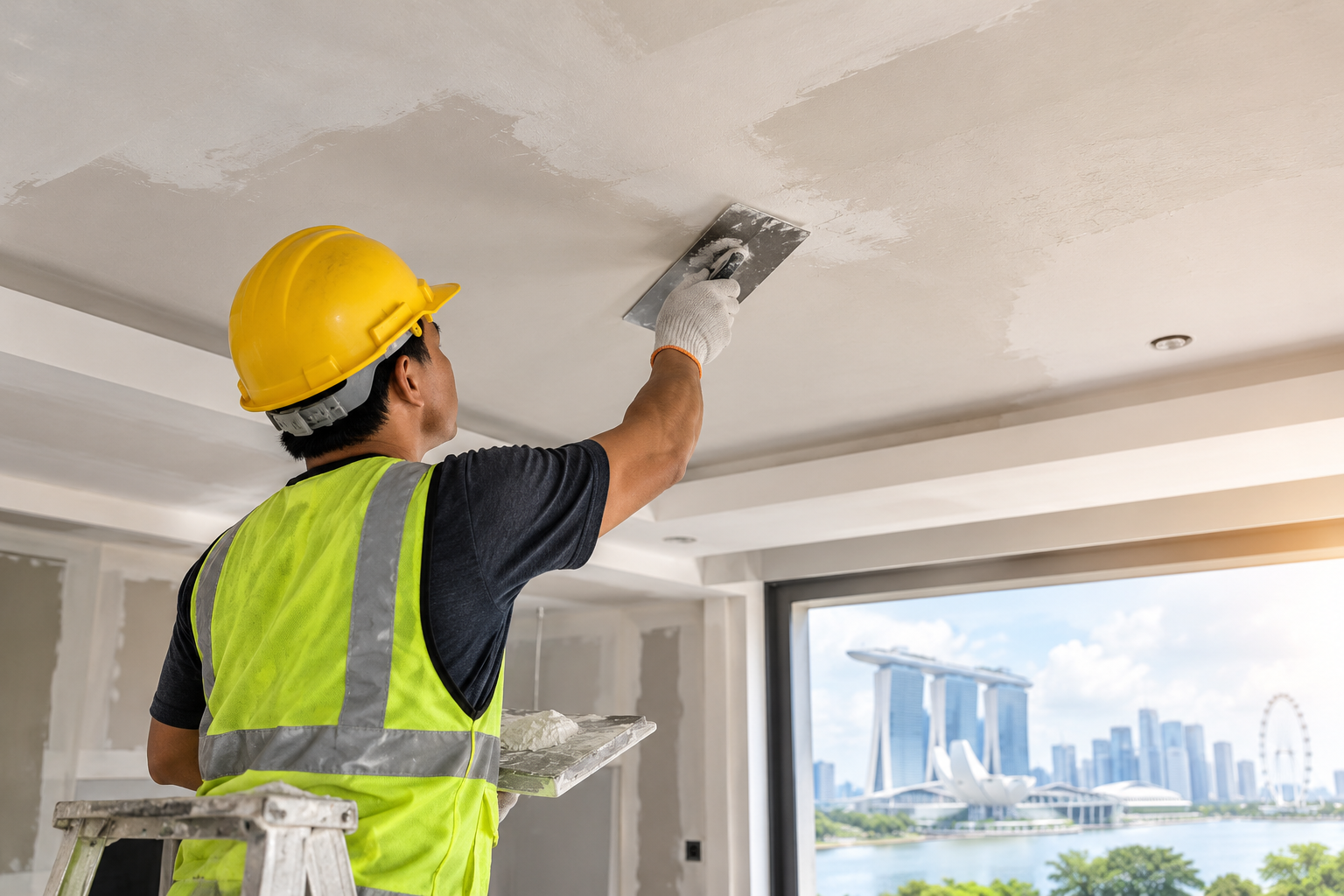
Proper plaster application helps level minor surface irregularities and creates a smoother appearance. The material and method should be selected according to the ceiling condition and project requirements.
For professional surface preparation and finishing, explore the plastering solutions available at https://www.singcons.com/plaster.php.
4. Sand and Finish the Surface
Once the plaster has dried appropriately, the surface can be smoothed and checked for visible marks or uneven patches. Careful finishing helps create a suitable base for primer and paint.
5. Use Suitable Lighting During Inspection
Inspecting the ceiling under different lighting conditions can help reveal imperfections that might otherwise go unnoticed. Correcting these areas before painting can improve the final result.
Why Professional Plaster Work Matters
Professional plaster work helps address surface irregularities with suitable preparation, application, and finishing techniques. It is particularly useful when ceilings have extensive uneven areas, recurring cracks, damaged plaster, or require consistent finishing across a large room.
Singcons provides plastering solutions for walls and ceilings, including surface preparation, plaster repair, and finishing for painting. You can learn more at https://www.singcons.com/plaster.php.
Choosing the correct repair method depends on the condition of the existing ceiling. Cosmetic defects may require local repairs, while persistent cracking or moisture damage needs further investigation before finishing work begins.
Frequently Asked Questions (FAQs)
1. What are the most common ceiling imperfections?
Common ceiling imperfections include cracks, uneven surfaces, rough plaster, bumps, peeling paint, and water stains. These issues can affect the overall appearance of an interior.
2. What causes uneven ceiling surfaces?
Uneven ceilings can result from improper plaster application, poor surface preparation, or previous repair work. Correct levelling and finishing help create a smoother surface.
3. Can plaster work improve the appearance of a damaged ceiling?
Yes, suitable plaster repairs can improve the appearance of ceilings with minor surface irregularities, rough patches, and damaged finishes. The repair method depends on the condition of the ceiling.
4. How can ceiling cracks be repaired?
Small cracks may be repaired using suitable filling and finishing materials after identifying their cause. Widening or recurring cracks should be inspected to determine whether there is an underlying structural issue.
5. Why is surface preparation important before painting a ceiling?
Surface preparation removes loose material and helps create a smooth, stable base for primer and paint. It also helps reduce visible imperfections in the final finish.
6. How does lighting reveal ceiling imperfections?
Natural light and ceiling lights can highlight bumps, uneven plaster, and surface marks by creating shadows. Inspecting the ceiling under different lighting conditions helps identify areas that need correction.
7. When should professional plastering services be considered?
Professional plastering services are useful when ceilings have extensive uneven surfaces, recurring cracks, damaged plaster, or require a consistent finish across a large area. Visit https://www.singcons.com/plaster.php to learn more about plastering solutions.
Conclusion
Ceiling imperfections can affect the appearance of an entire room, even when the rest of the interior is well designed. Uneven surfaces, cracks, rough plaster, and paint damage can reduce visual appeal and create an unfinished look.
With proper inspection, surface preparation, careful plaster application, and suitable finishing, property owners can achieve smoother and more attractive ceilings. Addressing the underlying cause of damage is equally important for maintaining the results over time.
For reliable plastering and surface-finishing solutions, visit https://www.singcons.com/plaster.php to explore the available services.