
Introduction
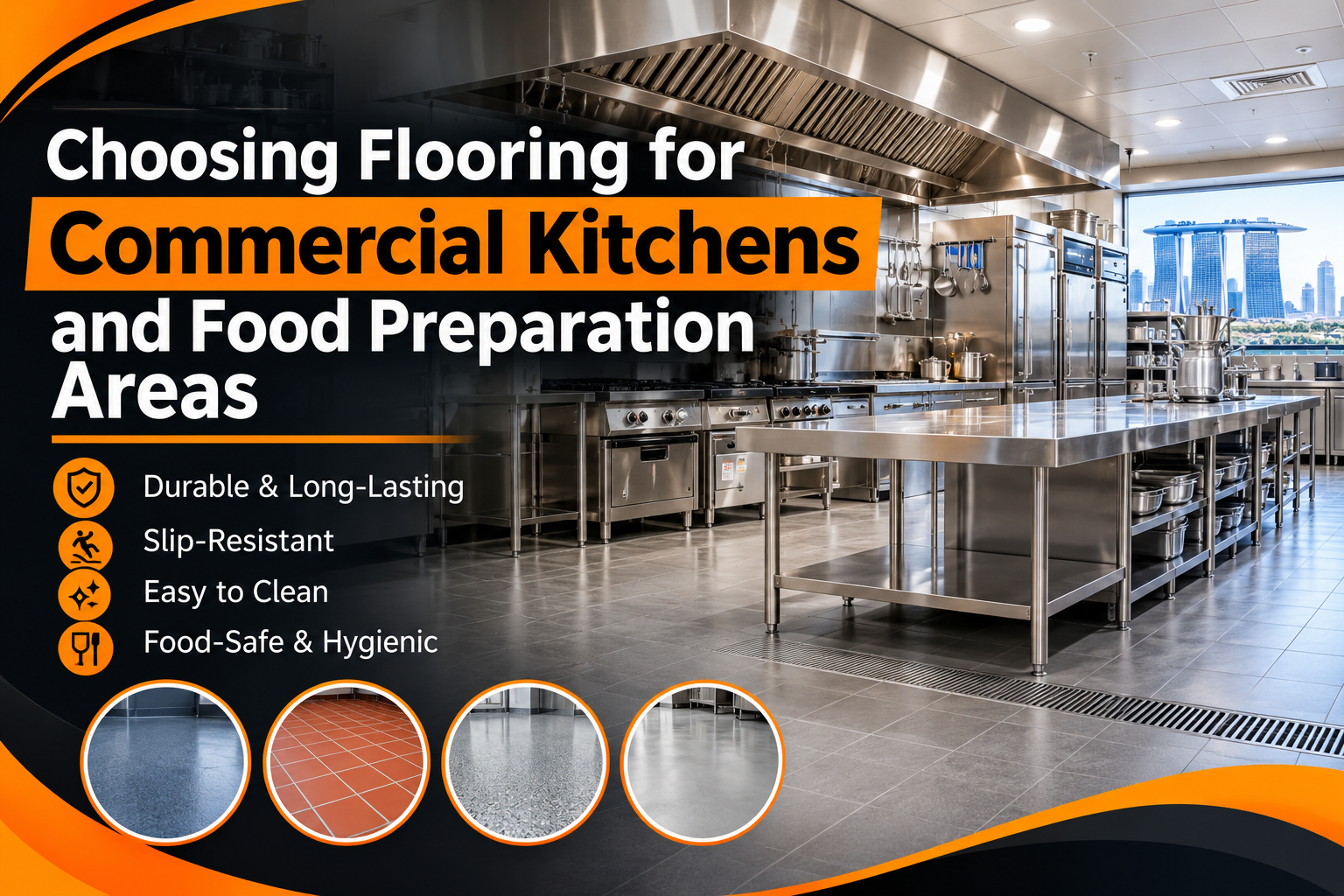
Commercial kitchens and food preparation areas require flooring that can withstand demanding working conditions. These environments experience frequent foot traffic, water spills, oil splashes, food residue, cleaning chemicals, and continuous equipment movement. Choosing an unsuitable flooring material can lead to surface damage, hygiene concerns, and increased maintenance requirements.
The right flooring solution should provide durability, slip resistance, easy cleaning, and long-term performance. Epoxy flooring is a popular choice for commercial kitchens because it creates a seamless and hard-wearing surface suitable for demanding food preparation environments.
Businesses planning kitchen renovations or commercial flooring projects can explore professional flooring solutions at https://www.singcons.com/epoxy.php.
1. Understand the Requirements of Commercial Kitchen Flooring
Commercial kitchens have different flooring requirements compared to ordinary residential or office spaces. Flooring must support daily operations while maintaining a clean and safe working environment.
Important factors include:
- Water Resistance: Floors should withstand regular washing and accidental liquid spills.
- Slip Resistance: Suitable surface finishes can help reduce slipping risks in wet and greasy areas.
- Chemical Resistance: Flooring should tolerate commonly used cleaning products and maintenance chemicals.
- Durability: Surfaces must withstand heavy equipment, frequent movement, and continuous foot traffic.
- Easy Maintenance: Flooring should allow effective cleaning without requiring complicated maintenance procedures.
Considering these requirements helps businesses select a suitable flooring system for their operational needs.
2. Why Epoxy Flooring Is Suitable for Food Preparation Areas
Epoxy flooring is created by applying a protective resin coating over a properly prepared concrete surface. Once cured, it forms a durable and seamless finish that supports demanding commercial environments.
Its major advantages include:
Seamless Surface: Epoxy flooring creates a continuous surface with fewer joints where dirt and food residue can accumulate.
Moisture Resistance: Properly installed epoxy systems provide protection against water exposure and regular cleaning activities.
Chemical Resistance: Selected epoxy formulations can withstand exposure to various cleaning chemicals and substances.
Durability: Epoxy coatings help protect concrete floors against abrasion, everyday wear, and equipment movement.
Easy Cleaning: The smooth, non-porous finish makes routine cleaning and maintenance easier.
Businesses looking for suitable commercial flooring options can learn more at https://www.singcons.com/epoxy.php.
3. Consider Slip Resistance and Workplace Safety
Safety is an important consideration when selecting flooring for commercial kitchens. Water, cooking oils, grease, and food spills can make floor surfaces slippery.
Choosing an appropriate anti-slip flooring finish can help improve traction and reduce workplace hazards.
Businesses should consider:
- Textured epoxy finishes for improved grip.
- Suitable anti-slip aggregates where required.
- Proper drainage to prevent water accumulation.
- Flooring finishes appropriate for wet and greasy environments.
- Regular inspection and cleaning schedules.
The selected slip-resistant finish should balance workplace safety with ease of cleaning.
4. Select Flooring That Supports Hygiene and Cleaning
Maintaining hygiene is essential in food preparation environments. Flooring should support regular cleaning and help prevent the accumulation of dirt, grease, and food particles.
Seamless epoxy flooring can make cleaning easier because it reduces joints and surface gaps. However, proper installation, suitable detailing, and regular maintenance remain important.
Businesses should also pay attention to floor-to-wall junctions, drainage points, and areas around kitchen equipment.
Selecting suitable flooring materials and following appropriate cleaning procedures can support better hygiene management.
5. Evaluate Heat and Chemical Exposure
Commercial kitchens regularly experience heat from cooking equipment, hot liquids, steam, and cleaning operations. Some areas may also come into contact with oils, detergents, and food-processing chemicals.
Not every epoxy flooring system offers the same level of resistance. Businesses should select a suitable formulation based on the temperature conditions, chemical exposure, and operational requirements of the kitchen.
For areas exposed to frequent hot-water cleaning or thermal fluctuations, specialist flooring systems may be necessary.
Professional assessment can help determine which epoxy system is appropriate for the environment.
6. Plan Proper Installation and Surface Preparation
Even high-quality flooring materials may perform poorly if the installation process is not handled correctly.
Before applying an epoxy coating, the existing concrete surface should be assessed and prepared properly.
Important installation considerations include:
- Removing dust, grease, and surface contaminants.
- Repairing cracks and damaged concrete.
- Checking moisture conditions.
- Preparing the concrete for proper coating adhesion.
- Applying suitable primers and epoxy layers.
- Allowing adequate curing time before operations resume.
Professional installation helps achieve a consistent finish and supports the long-term performance of the flooring system.
For commercial epoxy flooring requirements, visit https://www.singcons.com/epoxy.php.
7. Consider Long-Term Maintenance and Flooring Costs
Flooring selection should not depend only on the initial installation cost. Businesses should also evaluate maintenance requirements, repair expenses, expected service life, and operational interruptions.
A durable epoxy flooring system can help reduce frequent surface repairs when correctly selected and maintained.
Regular cleaning, timely repairs, and periodic inspections help maintain the flooring condition.
Businesses should compare flooring options based on their operational requirements rather than choosing a material based solely on its upfront price.
Frequently Asked Questions (FAQs)
1. Which flooring is suitable for commercial kitchens?
Epoxy flooring is a suitable option for many commercial kitchens because it provides a seamless, durable, and easy-to-clean surface. The specific system should match the kitchen's temperature, moisture, and chemical exposure requirements.
2. Is epoxy flooring suitable for wet food preparation areas?
Yes. Properly installed epoxy flooring can provide moisture resistance. An appropriate slip-resistant finish and effective drainage are also important.
3. How does epoxy flooring support kitchen hygiene?
Its seamless and non-porous finish helps reduce gaps where dirt and food residue can collect, making routine cleaning easier.
4. Does commercial kitchen epoxy flooring require regular maintenance?
Yes. Regular cleaning, inspection, and timely repair of damaged areas help maintain its performance and appearance.
5. Can epoxy flooring withstand commercial kitchen chemicals?
Selected epoxy formulations can resist various cleaning chemicals. The correct system should be chosen according to the chemicals and exposure conditions involved.
Conclusion
Choosing suitable flooring for commercial kitchens and food preparation areas requires careful consideration of hygiene, durability, slip resistance, moisture exposure, and maintenance requirements.
Epoxy flooring offers several practical advantages through its seamless finish, durability, and ease of cleaning. With proper surface preparation, suitable material selection, and professional installation, businesses can create flooring systems that support safer and more efficient kitchen operations.
To explore commercial epoxy flooring solutions in Singapore, visit https://www.singcons.com/epoxy.php.
Need for Commercial Kitchen Flooring
Commercial kitchens require durable, hygienic, and slip-resistant flooring to maintain safety and cleanliness. Proper flooring helps prevent accidents, withstands heavy foot traffic, resists moisture and stains, and supports easy cleaning and long-term maintenance.
Transform with Epoxy Flooring
High-quality epoxy flooring transforms commercial kitchen spaces into safer, stronger, and more hygienic working environments. Its seamless, durable, and easy-to-maintain surface helps businesses maintain professional standards while improving daily kitchen operations.