Introduction
Modern workplaces are continuously evolving as businesses adopt new working arrangements, expand their teams, and introduce different operational requirements. Traditional office layouts with permanent walls may not provide the flexibility needed to accommodate these changes. Businesses increasingly require spaces that can be modified without undertaking major construction work.
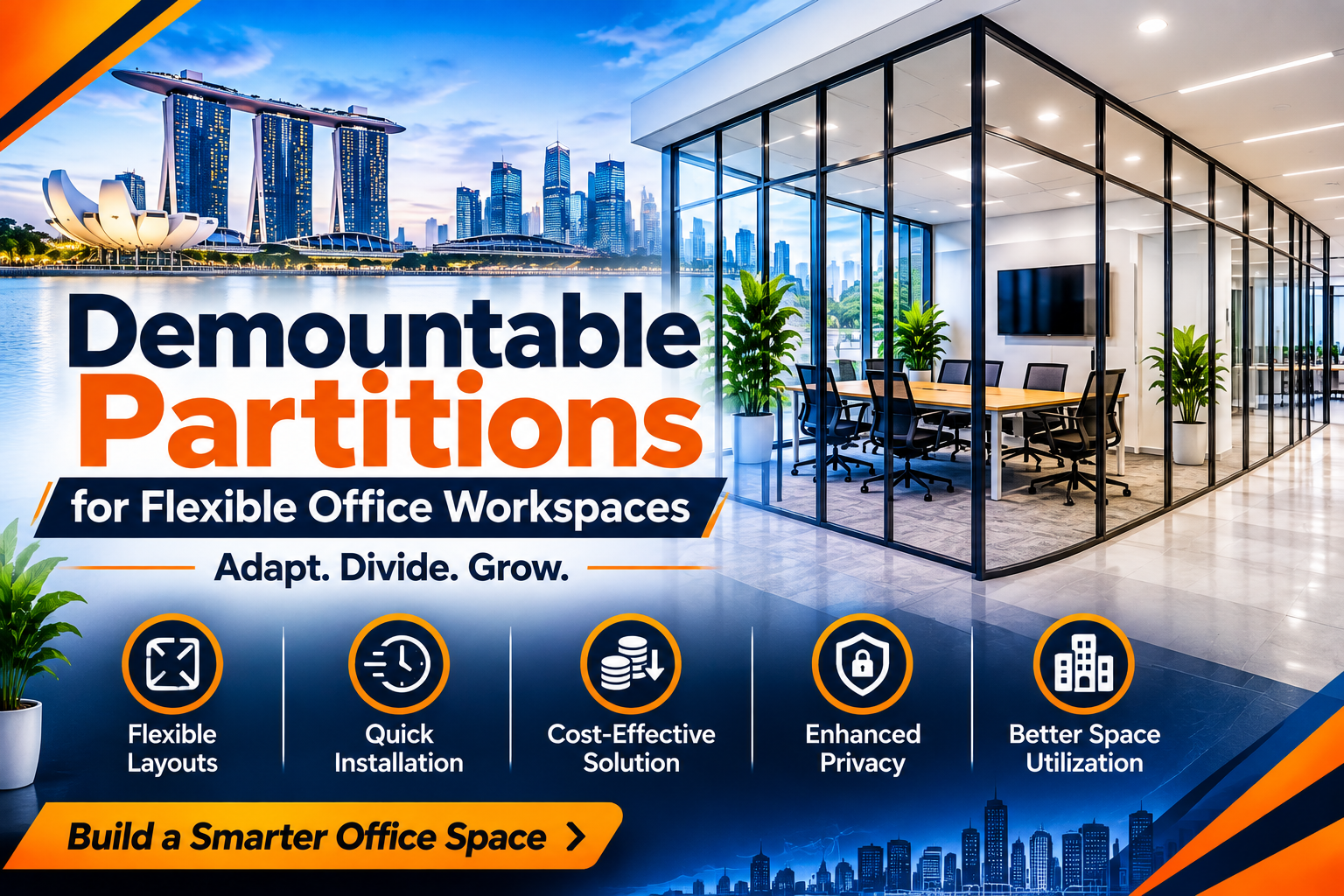
Demountable partitions offer an effective solution for creating adaptable office environments. These removable partition systems allow organizations to divide larger spaces into separate work areas, meeting rooms, private offices, and collaborative zones. They can also be relocated or reconfigured when workplace requirements change.
By incorporating flexible partition systems, businesses can improve space utilization, support employee productivity, and create organized office layouts. Companies looking for professional partition work solutions can explore https://www.singcons.com/partition.php.
What Are Demountable Partitions?
Demountable partitions are modular wall systems designed to divide interior spaces without requiring permanent structural construction. Unlike conventional brick walls, these partitions can be installed, dismantled, relocated, or modified according to changing requirements.
They are available in different materials, finishes, and configurations, allowing businesses to choose suitable options for their office environments.
Common types include:
- Glass Partitions: Provide visual openness while creating separate office areas.
- Aluminium Partitions: Offer lightweight and durable solutions for dividing workspaces.
- Gypsum Partitions: Help create enclosed rooms with a clean and professional appearance.
- Acoustic Partitions: Help reduce sound transmission and improve privacy.
- Modular Partitions: Allow office layouts to be modified as organizational needs change.
These systems provide businesses with greater control over how their interior spaces are organized.
Why Modern Offices Need Flexible Workspaces
Office requirements can change because of business expansion, employee numbers, departmental restructuring, and new working practices. A layout that works well today may become unsuitable in the future.
Flexible workspaces help businesses respond to these changes without completely redesigning their premises.
Some common workplace requirements include:
- Creating additional meeting rooms for growing teams.
- Providing private spaces for confidential discussions.
- Developing collaborative areas for group activities.
- Separating departments with different operational needs.
- Adjusting office layouts to accommodate hybrid working arrangements.
Demountable partition systems make these adjustments easier by offering adaptable interior solutions. Businesses can explore suitable partition services at https://www.singcons.com/partition.php.
Key Benefits of Demountable Partitions for Changing Office Requirements
1. Easy Office Reconfiguration
One of the biggest advantages of demountable partitions is their ability to support changing office layouts. Businesses can reorganize existing spaces by removing or repositioning partition sections.
For example, a company may initially need several small offices but later require a larger collaborative workspace. Modular partitions make it easier to accommodate such changes.
2. Better Space Utilization
Demountable partitions help businesses use available office space more effectively. Large open areas can be divided into functional sections without constructing permanent walls.
This allows organizations to create designated workstations, meeting areas, reception spaces, and private offices within the same floor area.
3. Improved Employee Privacy
Open-plan offices encourage communication, but they may not provide sufficient privacy for every activity. Demountable partitions help establish separate work areas where employees can focus on individual responsibilities.
Acoustic partition options can also help reduce unwanted noise, depending on the materials and installation specifications.
4. Cost-Effective Office Modifications
Permanent construction can involve significant time, labour, and material requirements. Demountable systems offer an alternative for businesses that expect their office requirements to change.
Since many systems can be reused or reconfigured, they may reduce the need for repeated permanent construction work.
5. Professional Office Appearance
Modern partition systems are available in different finishes and designs. Glass, aluminium, and other modular materials can create a clean and organized workplace appearance.
Businesses can select partition styles that complement their interior design and professional environment.
6. Support for Business Expansion
As organizations grow, they may need additional workstations, meeting rooms, or departmental spaces. Demountable partitions help accommodate these requirements by making existing office areas more adaptable.
How Demountable Partitions Support Different Office Areas
Different departments and workplace activities require different types of spaces. Demountable partitions allow businesses to organize their offices according to specific operational needs.
Private Offices
Businesses can create enclosed work areas for managers, executives, and employees who require a quieter environment for focused tasks.
Meeting and Conference Rooms
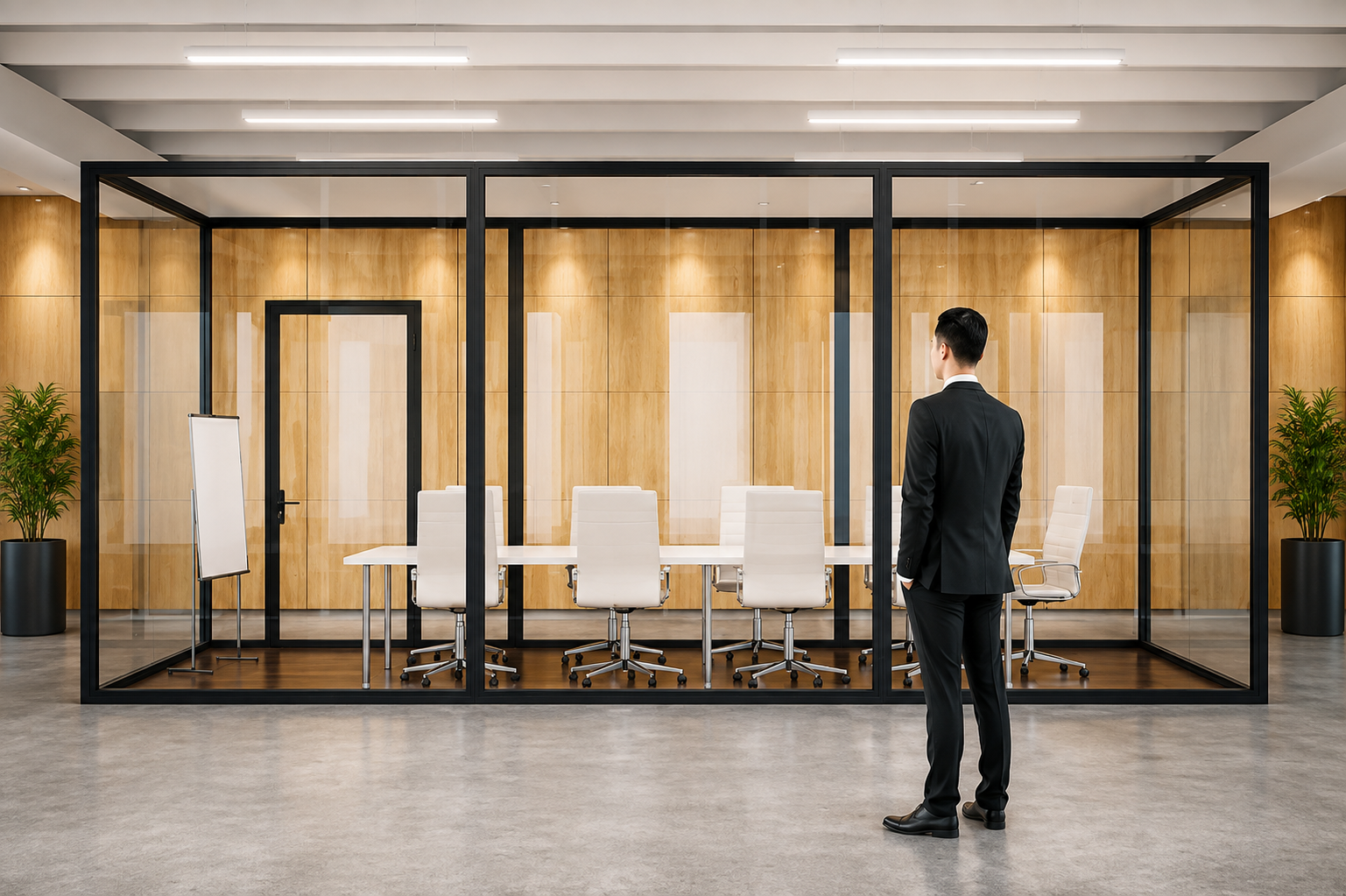
Partition systems can help convert larger office spaces into separate meeting rooms for discussions, presentations, and team planning.
Collaborative Workspaces
Organizations can create dedicated collaboration areas where employees can communicate, exchange ideas, and work together on projects.
Reception and Waiting Areas
Demountable partitions can separate reception spaces from operational office areas, creating a more organized visitor experience.
Training and Multipurpose Rooms
Flexible partitions can help businesses create spaces for employee training, workshops, and internal meetings according to their requirements.
Factors to Consider Before Installing Demountable Partitions
Selecting the right partition system requires an understanding of office requirements, available space, and future modification plans.
Businesses should consider the following factors:
- Office Layout: Evaluate the available floor area and identify where separate spaces are required.
- Material Selection: Choose suitable materials based on durability, appearance, and functionality.
- Sound Insulation: Consider acoustic requirements for meeting rooms and private offices.
- Natural Lighting: Glass partitions can help maintain light flow across different office sections.
- Future Flexibility: Select systems that can accommodate possible layout changes.
- Installation Requirements: Ensure that the selected partition system is suitable for the existing building structure.
- Maintenance: Consider cleaning, repair, and long-term maintenance requirements.
Proper planning helps businesses select partition solutions that support both current and future workplace needs.
Demountable Partitions vs. Traditional Permanent Walls
Both partition systems and traditional walls can divide office spaces, but they offer different levels of flexibility.
| Feature | Demountable Partitions | Permanent Walls |
|---|---|---|
| Installation | Generally quicker | Often requires more construction work |
| Flexibility | Can be reconfigured | Difficult to modify |
| Reusability | Many systems can be reused | Generally not reusable |
| Design Options | Various modular finishes | Depends on construction materials |
| Office Changes | Supports changing layouts | Requires structural modifications |
| Space Planning | Suitable for adaptable offices | Suitable for fixed layouts |
The right option depends on the building, budget, design preferences, and long-term office requirements.
The Role of Professional Partition Installation
Proper installation is essential for achieving a functional and reliable partition system. Poor installation can result in alignment problems, unstable panels, gaps, and reduced performance.
Professional partition work involves evaluating the office layout, selecting appropriate materials, measuring available space, and installing the system according to project requirements.
Businesses should also consider electrical fittings, door placement, ventilation, and building regulations before finalizing the partition design.
For professional partition installation and related interior solutions, visit https://www.singcons.com/partition.php.
Frequently Asked Questions (FAQs)
1. What are demountable partitions used for?
Demountable partitions are used to divide office interiors into separate work areas, meeting rooms, private offices, and collaborative spaces. They can be modified when workplace requirements change.
2. Are demountable partitions reusable?
Yes. Many demountable partition systems are designed to be dismantled and reinstalled in different locations, depending on their construction and installation method.
3. Can demountable partitions improve office privacy?
Yes. They help create separate work areas, while suitable acoustic materials can reduce sound transmission and improve workplace privacy.
4. Are glass demountable partitions suitable for offices?
Yes. Glass partitions are commonly used in offices because they create separate spaces while maintaining visual openness and allowing natural light to pass through.
5. Are demountable partitions suitable for growing businesses?
Yes. They allow growing businesses to reorganize office layouts, create additional work areas, and adapt existing spaces without relying entirely on permanent construction.
6. What materials are commonly used in demountable partitions?
Common materials include glass, aluminium, gypsum boards, and modular panels. The selection depends on design preferences, privacy requirements, and intended use.
7. How do businesses choose the right partition system?
Businesses should consider office size, layout, acoustic requirements, material quality, installation conditions, maintenance, and future workspace changes.
Conclusion
Demountable partitions provide a practical way for businesses to create flexible and adaptable office environments. Their ability to support layout changes, improve space utilization, establish private areas, and accommodate business expansion makes them a valuable solution for modern workplaces.
By selecting suitable materials and ensuring professional installation, organizations can create functional office spaces that respond to changing operational requirements. Investing in flexible partition systems can help businesses maintain organized, efficient, and future-ready work environments.
Visit Website
For professional partition work and interior space solutions, visit https://www.singcons.com/partition.php and explore services that can help transform office spaces into functional and flexible environments.