Introduction
Door frames play an important role in maintaining the stability, security, and functionality of commercial properties. They support doors, hold hinges and locking hardware, and help ensure smooth opening and closing operations. In offices, retail stores, warehouses, and other commercial buildings, door frames experience frequent use and can gradually develop damage.
Cracks, loose fittings, moisture exposure, corrosion, and physical impacts can weaken door frames over time. Ignoring these problems may affect door alignment, security, and the overall appearance of a property. Timely carpentry and door frame repair help maintain reliable door performance and prevent further structural deterioration.
Businesses looking for professional carpentry solutions can explore https://www.singcons.com/Carpentry.php for relevant property maintenance and repair services.
Understanding Common Door Frame Problems
Commercial door frames are generally made from wood, metal, or other durable materials. However, regular usage and environmental conditions can affect their condition.
Some common door frame problems include:
- Cracks and splits caused by repeated pressure or physical impact.
- Loose hinges and screws affecting door stability.
- Wood deterioration caused by moisture exposure.
- Rust and corrosion on metal frames.
- Misalignment that prevents doors from closing properly.
- Damaged sections around locks and strike plates.
Identifying these issues early helps property owners select suitable repair methods and maintain safe, functional entrances.
1. Identifying the Cause of Door Frame Damage
Before starting repairs, it is important to understand why the door frame has become damaged. Physical impacts, frequent door usage, moisture, poor installation, and loose hardware can contribute to deterioration.
For example, a commercial entrance used throughout the day may experience repeated pressure around its hinges and locking points. Similarly, moisture can cause wooden frames to swell, crack, or deteriorate.
A proper inspection helps identify the affected areas and determine whether localized repairs or complete frame replacement may be necessary.
2. Repairing Cracked and Damaged Wooden Frames
Wooden door frames are commonly used in offices and commercial interiors. Although they provide a professional appearance, they can develop cracks, dents, and surface damage over time.
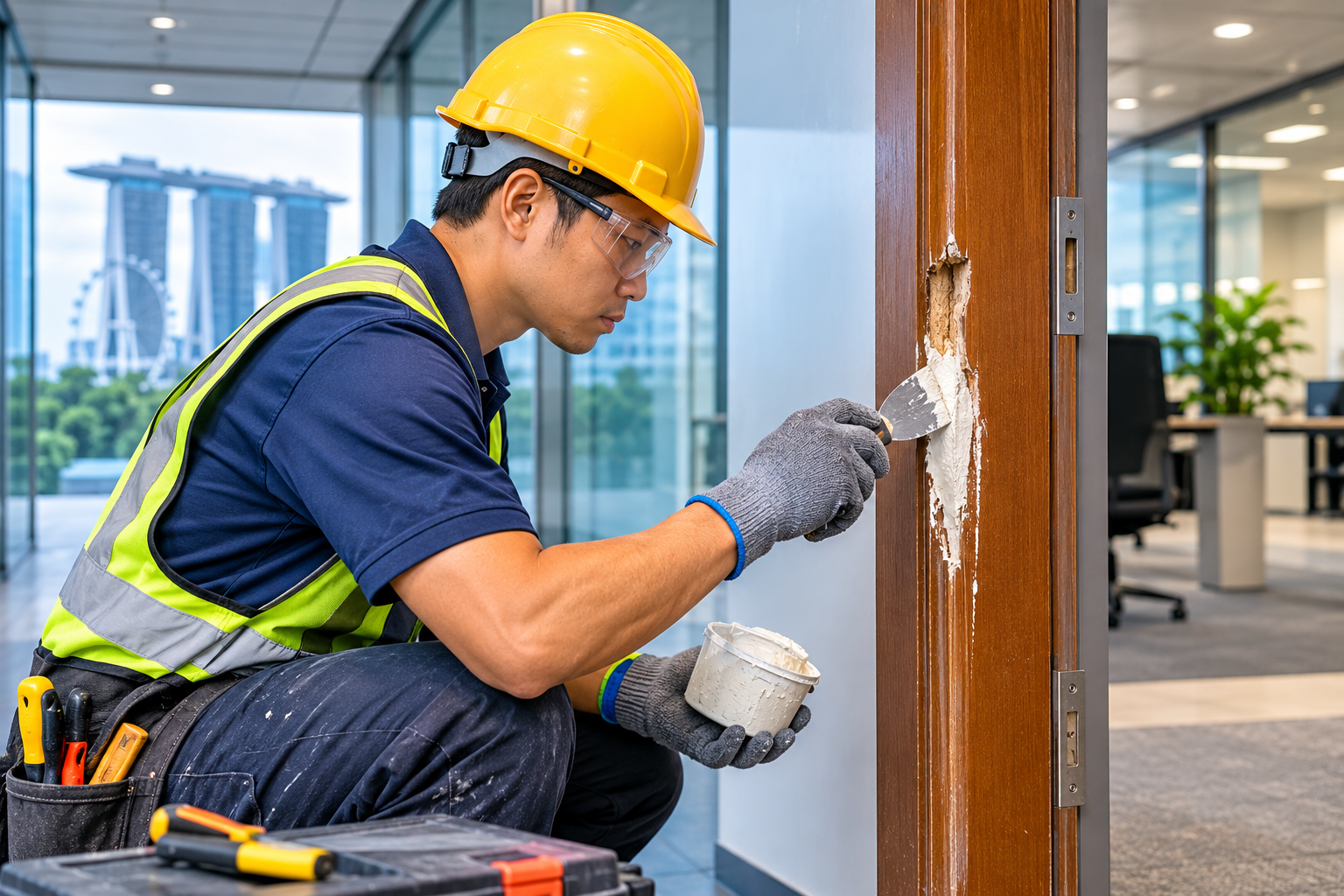
Minor damage may be repaired by removing loose material, preparing the affected surface, and applying a suitable wood repair filler. Once the repaired area is dry, it can be sanded and refinished to match the surrounding frame.
However, extensive rot, deep structural cracks, or weakened fixing points may require replacing the affected frame section.
Professional carpentry work helps restore the frame's appearance and functionality. For more information about carpentry solutions, visit https://www.singcons.com/Carpentry.php.
3. Fixing Loose Hinges and Door Frame Connections
Hinges connect the door to its frame and support its movement. Loose screws, damaged fixing points, or weakened frame sections can cause doors to sag or become difficult to operate.
Repair work may include:
- Inspecting hinge connections and mounting points.
- Tightening or replacing damaged screws.
- Repairing weakened fixing areas.
- Replacing damaged hinges when necessary.
- Checking door alignment after repairs.
Properly secured hinges help maintain smooth door movement and reduce unnecessary pressure on the frame.
4. Addressing Moisture Damage and Wood Deterioration
Moisture is a common cause of wooden door frame deterioration, particularly near bathrooms, kitchens, exterior entrances, and other areas exposed to water.
Prolonged moisture exposure can cause wood to swell, soften, crack, or develop decay. Repairing affected areas requires identifying the moisture source and allowing the material to dry before restoration.
Depending on the extent of damage, carpentry professionals may repair localized sections or replace severely deteriorated components. Suitable protective coatings and proper sealing can also help reduce future moisture-related problems.
5. Repairing Metal Door Frames
Metal door frames are frequently installed in commercial buildings because of their strength and durability. However, they can still experience dents, corrosion, loose anchors, and alignment problems.
Minor surface corrosion may require cleaning and protective treatment, while more extensive damage may need professional repair or replacement.
The repair approach should consider the frame material, structural condition, hardware requirements, and intended use of the doorway.
For commercial property maintenance and carpentry assistance, businesses can explore https://www.singcons.com/Carpentry.php.
6. Restoring Door Alignment and Proper Closing
A damaged or misaligned frame can prevent doors from opening and closing correctly. Doors may rub against the frame, fail to latch, or create uneven gaps around the opening.
Repairing these issues involves checking the frame position, hinge connections, hardware, and surrounding structure.
Proper alignment helps improve door operation and reduces unnecessary wear on hinges, locks, and other components.
For fire-rated doors, repairs and modifications must follow applicable safety requirements and preserve the assembly's approved fire-protection performance.
7. Preventive Maintenance for Commercial Door Frames
Regular maintenance helps businesses identify early signs of door frame deterioration and avoid unexpected repair requirements.
Useful maintenance practices include:
- Inspecting frames for cracks, dents, and corrosion.
- Checking hinges, screws, and mounting connections.
- Monitoring signs of moisture damage.
- Ensuring doors open and close smoothly.
- Maintaining suitable protective finishes.
- Arranging professional inspections when structural damage is identified.
Consistent maintenance helps extend the service life of door frames and supports reliable commercial property operations.
Benefits of Timely Door Frame Repairs
Repairing damaged door frames offers several advantages:
- Improves door stability and functionality.
- Supports property security.
- Reduces the risk of further deterioration.
- Maintains a professional property appearance.
- Helps prevent unnecessary replacement expenses.
- Improves the performance of hinges and locking hardware.
- Supports safer and more reliable access.
Frequently Asked Questions (FAQs)
1. What causes commercial door frames to become damaged?
Common causes include physical impacts, frequent usage, moisture exposure, corrosion, loose hardware, and improper installation.
2. Can a cracked wooden door frame be repaired?
Yes. Minor cracks and surface damage can often be repaired using suitable wood fillers and refinishing techniques. Severely weakened sections may require replacement.
3. How can businesses identify a damaged door frame?
Visible cracks, loose hinges, uneven gaps, corrosion, difficulty closing doors, and damaged fixing points are common warning signs.
4. How often should commercial door frames be inspected?
Inspection frequency depends on usage and environmental conditions. High-traffic entrances may require more frequent checks, while regular scheduled inspections help identify developing problems.
5. When should a commercial door frame be replaced instead of repaired?
Replacement may be necessary when the frame has extensive rot, severe corrosion, significant structural deformation, or damage that prevents reliable fixing and alignment.
Conclusion
Damaged door frames can affect the safety, security, functionality, and appearance of commercial properties. Identifying problems early and applying appropriate repair methods helps maintain reliable door operation and reduce further deterioration.
Through regular inspections, suitable carpentry techniques, and preventive maintenance, businesses can keep their commercial door frames in better condition. Professional repair services also help determine when localized restoration is sufficient and when replacement is the more appropriate solution.
Visit Website: https://www.singcons.com/Carpentry.php